Voice Dubbing Between Humans and AI
How We Craft the Sound of “Jesus of Nazareth”
In modern filmmaking, sound is no longer just a supporting element—it is one of the most powerful tools for emotional impact. With the rise of advanced technologies, a critical question emerges:
Should voices be entirely human… or can artificial intelligence take the lead?
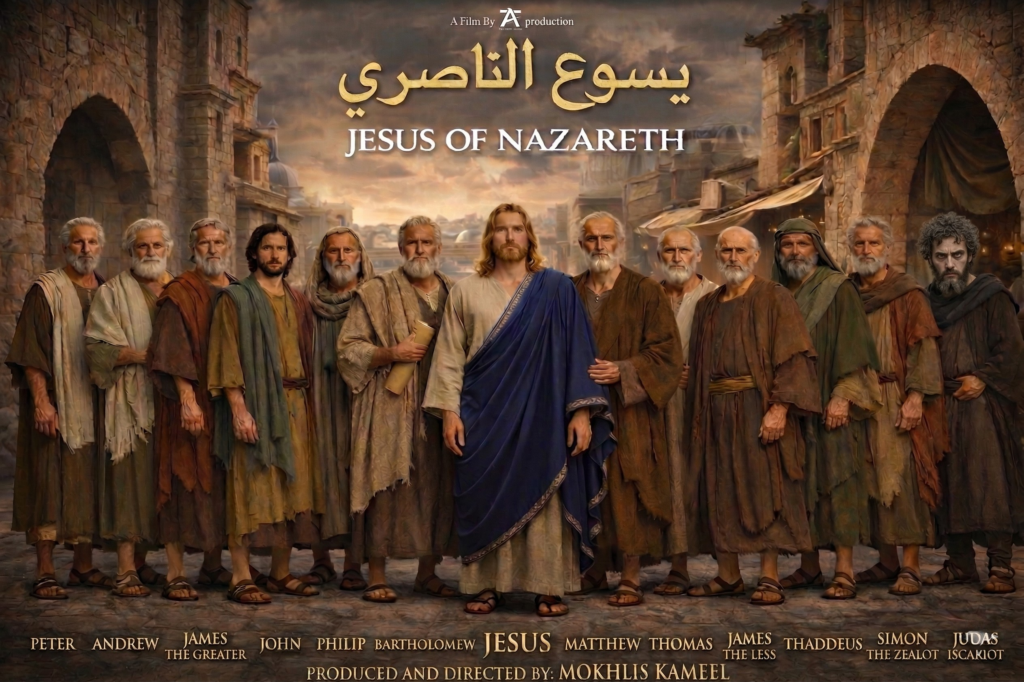
In our cinematic project “Jesus of Nazareth” — a film produced entirely using AI technologies — we don’t see this as a choice between two sides, but rather as a carefully balanced collaboration between human and machine.
The Role of AI in Voice Dubbing
Today, AI can generate highly realistic human-like voices, capable of:
- Replicating different vocal tones (age, strength, calmness)
- Maintaining consistency across long scenes
- Allowing fast edits without re-recording
- Producing multiple language versions efficiently
In “Jesus of Nazareth”, AI is used for:
- Background voices (soldiers, crowds, ambient murmurs)
- Draft dialogue versions during early production stages
- Scenes that require repetition or high-volume vocal layers
But Where Does the Human Element Step In?
Despite its power, AI still cannot fully replicate the depth of human emotion. Voice is not just sound—it’s feeling.
Human involvement becomes essential in:
1. Deep Emotional Scenes
Moments involving:
- Pain
- Sorrow
- Silent reflection
- Inner conflict
These subtle emotional layers require a human touch.
2. The Voice of the Main Character
A figure like Jesus demands:
- Spiritual presence
- Calm authority
- Emotional depth
Here, a human voice—or at least strong human direction over AI-generated voice—is crucial.
3. Final Performance Direction
Even when AI is used:
- A human defines the emotional tone
- A human selects the best performance
- A human reshapes dialogue to sound natural
In simple terms:
AI executes… humans decide.
Are We Looking for Real Voice Actors?
The honest answer: Yes — but selectively.
We are not looking for large numbers, but for:
- Unique and expressive voices
- Strong emotional control
- The ability to feel the words before speaking them
Human voices are mainly needed for:
- The main character
- Key supporting roles
- Specific emotionally intense scenes
The rest of the production can be efficiently handled by AI.
The Philosophy Behind the Blend
At a deeper level:
AI represents precision and speed
Humans represent emotion and meaning
A great film is not built on one alone—but on the harmony between both.
In “Jesus of Nazareth”, the goal is not to prove that AI can replace humans…
but to show that it is a powerful tool in the hands of a creator who knows when to use it—and when to go beyond it.
Voice Actor Requirements for “Jesus of Nazareth”
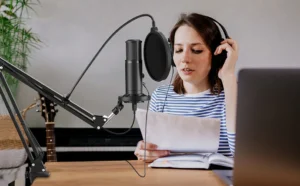
In a project that blends artificial intelligence with human performance, selecting the right voice is not about quantity—it’s about depth, control, and authenticity.
We are looking for individuals who can deliver more than just lines…
we are looking for voices that carry meaning.
Core Requirements
1. Emotional Depth
The ability to express subtle and complex emotions such as:
- Pain without exaggeration
- Quiet sorrow
- Inner strength
- Calm authority
The performance must feel real, not theatrical.
2. Natural Voice Quality
- Clear pronunciation
- No artificial tone or forced acting
- A voice that feels human, grounded, and believable
We prefer voices that sound honest rather than dramatic.
3. Controlled Performance
- Ability to speak with restraint
- Understanding when to lower intensity instead of raising it
- Consistent tone across multiple takes
In this project, silence and pauses are as important as words.
4. Understanding of Cinematic Acting
- Awareness that this is film, not stage performance
- Subtle delivery instead of exaggerated expression
- Ability to match voice with visual emotion
The voice should blend seamlessly with the scene—not dominate it.
5. Adaptability with AI Workflow
Since this project integrates AI:
- Willingness to work alongside AI-generated voices
- Ability to record multiple variations of the same line
- Openness to direction and fine adjustments
The actor is part of a hybrid creative process, not a traditional one.
Preferred Qualities
- Deep, calm, or emotionally rich voice tone
- Strong listening skills and responsiveness to direction
- Patience and attention to detail
- Respect for the sensitivity and depth of the subject matter
Special Focus (Main Character)
For major roles, especially the central character:
- A voice with spiritual presence
- Calm but powerful delivery
- Emotional control without exaggeration
- Ability to express meaning through minimal words
Final Note
We are not looking for “perfect voices”…
we are looking for true voices.
Because in a film where technology builds the world,
only a human voice can give it a soul.
Contact us here contact@flowstudio.tf